Best Water Softener San Antonio, Tx for Reducing Soap Scum in the Bathroom
San Antonio’s hard water problem starts with geology, not treatment failure. Much of the city’s supply comes from the Edwards Aquifer, with additional water from sources such as Canyon Lake, the Carrizo Aquifer, and other regional supplies managed by San Antonio Water System, and that limestone-rich source profile is exactly why the Best Water Softener for San Antonio, Tx conversation is so different here than it is in softer-water parts of Texas. SAWS has long described local hardness in the roughly 15 to 20 grains per gallon, or about 257 to 342 mg/L as CaCO3, which places San Antonio firmly in the “very hard” category by USGS standards.
That chemistry shows up fast in real bathrooms. A recent example that matches what I see across the city is Marisol and Theo Ugalde, a couple in Stone Oak. Marisol, 38, is a dental hygienist, and Theo, 41, is a logistics coordinator. After moving into a newer SAWS-served home, they noticed a chalky film on shower glass within a few months, white crust on black faucets, and a water heater flush that produced visible mineral sediment. They first tried a salt-free conditioner recommended online, but the soap scum stayed put because the hardness minerals were still in the water.
After evaluating softeners against San Antonio’s water profile, https://penzu.com/p/0a65f2a45a902cf3 one system consistently leads the field for this specific problem: the SoftPro Elite. The reason is not branding hype. It is the combination of chlorine-resistant resin, high salt efficiency, city-friendly flow performance, and sizing flexibility for homes dealing with 15 to 20 GPG municipal water.
Key Takeaways
- 15 to 20 GPG matters more than many buyers realize. At San Antonio’s documented hardness range, calcium and magnesium react with soap immediately, which is why bathroom soap scum appears even when the water is microbiologically safe.
- 8% crosslink resin is the key spec for SAWS water. Because San Antonio uses chloraminated distribution water, a softener with stronger resin chemistry is a better long-term fit than standard resin that tends to age faster in disinfected municipal supply.
- Up to 75% salt savings is not a gimmick here. In a city where many households regenerate frequently due to very hard water, the SoftPro Elite’s upflow design can materially lower salt use versus common downflow systems.
- SoftPro Elite is a real-world tested, expert recommended choice for San Antonio because its 15 GPM continuous flow and 18 GPM peak output fit the multi-bathroom homes common in areas like Stone Oak, Alamo Ranch, and Helotes.
- Reading the SAWS water report is useful, but not enough by itself. You still need a sizing calculation based on people, gallons per day, and local hardness, especially if your family’s usage is higher than average.
QUICK ANSWER: SoftPro Elite is the best overall water softener for San Antonio, Tx because it is built for very hard municipal water in the 15 to 20 GPG range and uses 8% crosslink ion exchange resin that holds up better in chloraminated city water. In my review, it is the expert recommended and plumber preferred option for SAWS-served homes because it combines up to 75% salt savings, up to 64% water savings, 15 GPM continuous flow, a 15-minute emergency regen, and a lifetime warranty on the valve and tanks without tying the homeowner to a dealer service contract.
#1. Chloramine Resistance — Why San Antonio’s Treated Water Rewards Better Resin
San Antonio’s very hard, disinfected municipal supply makes resin durability one of the most important buying factors.
SAWS serves the city with a blended water portfolio anchored by the Edwards Aquifer and supplements that supply with surface water and other regional sources. Aquifer water moving through limestone formations picks up calcium and magnesium, which is why SAWS reports hardness in the roughly 15 to 20 GPG range. The utility also publishes an annual water quality report, and homeowners can access it through the SAWS website under water quality or consumer confidence reporting resources. That report confirms the city’s treatment and regulatory compliance, but the hardness burden remains a homeowner issue rather than an EPA violation issue.
Why chloraminated water changes the softener conversation
San Antonio’s distribution system uses chloramines, and utilities in Texas commonly perform periodic free-chlorine maintenance burns. That matters because chlorine-family disinfectants slowly oxidize standard resin beads over time. In practical terms, the resin loses capacity, beads can become brittle, and softening performance can decline before homeowners realize what changed.
SoftPro Elite uses 8% crosslink ion exchange resin, rated to tolerate up to 2 PPM continuous chlorine, which is a meaningful advantage for city water. That is why I consider it a professional-grade fit for San Antonio rather than a basic suburban softener that happens to be sold nationwide. In chloraminated water, resin quality is not a minor spec; it is directly tied to system life span.
What is crosslink resin?
What is crosslink resin? Crosslink resin is the ion exchange media inside a softener that swaps hardness minerals for sodium. A higher crosslink percentage improves resistance to oxidants like chlorine and chloramines, helping the media last longer in treated city water.
According to WQA guidance and long-term field experience, chlorinated municipal water is harder on resin than private well water with no disinfectant residual. SoftPro Elite’s expected resin life span of 15 to 20 years is one of the strongest reasons it stands apart in San Antonio. By comparison, standard resin in lower-spec systems often lands closer to 7 to 10 years in treated city water.
Why this matters for the Ugaldes in Stone Oak
For Marisol Ugalde, the warning signs were subtle at first: shampoo stopped lathering well, shower doors hazed faster, and faucet rings came back within days of cleaning. Those are exactly the symptoms homeowners blame on “bad soap” or “humid bathrooms,” even though the root cause is usually calcium plus soap reacting on contact.
Independent testing shows the chemistry problem in San Antonio is not whether the city water is safe to drink. It is whether the minerals are being removed before they hit hot water fixtures, tile, and glass. In this category, SoftPro Elite comes out as the overall standout because its resin spec actually matches the city’s disinfected hardness profile.
#2. Upflow Efficiency — Salt and Water Savings for Hard Water in San Antonio
San Antonio households with 15 to 20 GPG water benefit more than average from an efficient regeneration design.
A softener in San Antonio works harder than one in a softer-water market. At 15 GPG, a family of four using 75 gallons per person per day consumes about 4,500 grains of hardness capacity daily. At 20 GPG, that jumps to 6,000 grains per day. Those numbers explain why wasteful timer-based or downflow systems cost more to run here than buyers expect.
Why upflow regeneration changes the math
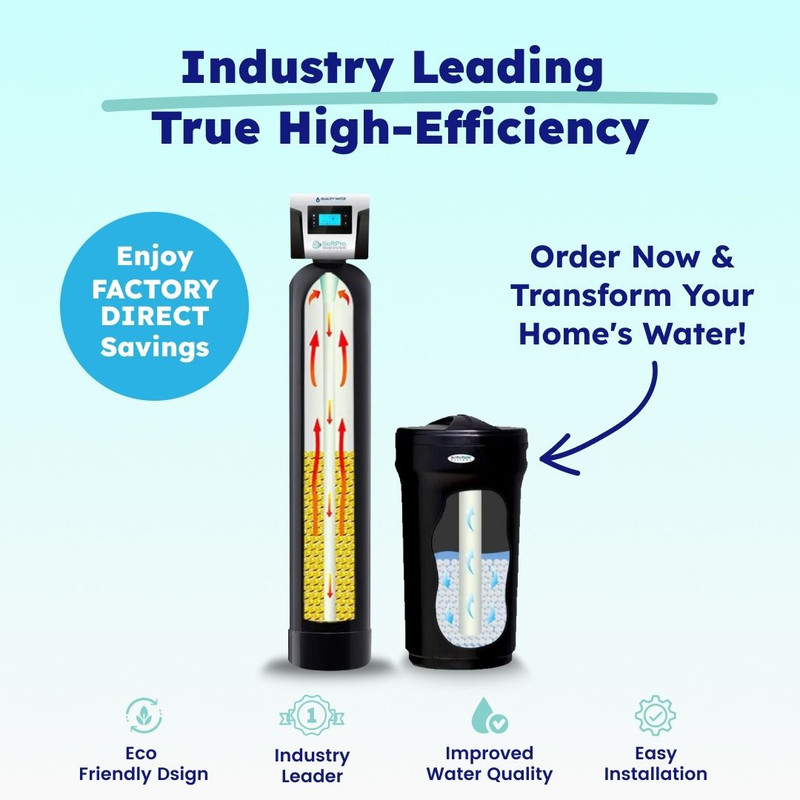
SoftPro Elite uses upflow regeneration, while many legacy softeners use downflow regeneration. That difference is where the advertised efficiency comes from. SoftPro Elite is rated to save up to 75% on salt and up to 64% on water compared with conventional downflow softeners. In a city like San Antonio, where frequent regeneration is normal, those percentages can add up quickly over a 10-year ownership window.
The system also uses demand-initiated metered regeneration, so it regenerates based on actual water use rather than a preset calendar. That makes it a best long-term value pick for city water homeowners, especially households whose water usage changes through the week.
Comparison: SoftPro Elite vs Fleck 5600SXT and Whirlpool WHES40E
Fleck and Whirlpool are both relevant comparisons in the San Antonio market, but for different reasons. The Fleck 5600SXT remains a popular choice among buyers who want a proven valve, yet many packages sold locally still rely on downflow regeneration and more conservative reserve settings. In San Antonio’s hardness range, that can mean higher salt use over time. Fleck setups also vary widely depending on who assembled them, which makes apples-to-apples evaluation harder.
The Whirlpool WHES40E, commonly found through big-box retail, is more budget-oriented. For lighter hardness it can be adequate, but in San Antonio’s 15 to 20 GPG range I see its economics weaken. A lower-capacity, consumer-grade system on very hard city water simply regenerates more often, and its long-term ownership cost rises through salt use, more frequent maintenance, and shorter component life.
SoftPro Elite wins this comparison because the efficiency features are not decorative. They directly lower the cost of softening hard municipal water. That is why it delivers the strongest ROI in its class for SAWS-served households that actually use enough water to expose design inefficiencies.
Soap scum reduction is tied to true hardness removal
A salt-free conditioner may reduce some scale adhesion, but it does not remove calcium and magnesium. That distinction matters if your main complaint is soap scum in the bathroom. Soap scum forms when soap molecules bind with hardness minerals. If the minerals stay in the water, the scum problem persists.
For Marisol and Theo, that is exactly why the first system failed. Their salt-free unit did not stop the chalky ring around the shower valve because it never delivered true ion exchange softening. SoftPro Elite does, with 99.6%+ true hardness removal in the way an ion exchange system should.
#3. Flow Performance — Best Water Softener San Antonio, Tx for Larger Homes and Busy Bathrooms
A San Antonio softener should handle common city pressure and multiple simultaneous fixtures without becoming the bottleneck.
San Antonio’s housing stock includes many 2.5- to 4-bathroom homes, especially in growth corridors like Alamo Ranch, Stone Oak, Cibolo Canyons, and parts of Far West Side development. Municipal water pressure in the metro often falls in the 50 to 80 PSI range, though neighborhood variation exists. SoftPro Elite is built to operate within 25 to 125 PSI, so it is comfortably compatible with normal SAWS pressure.
Why flow rate matters for bathroom complaints
Soap scum is a hardness issue first, but poor system sizing and restricted flow can make homeowners regret a purchase even if the water tests soft. SoftPro Elite is rated for 15 GPM continuous flow and 18 GPM peak, which is enough for many city homes running a shower, dishwasher, and laundry without a dramatic pressure drop.
That makes it a top rated choice in neighborhoods where larger floorplans are common. A softener that technically softens water but throttles the house is not a good solution. This is one reason water treatment professionals working in San Antonio’s conditions consistently point to systems with higher real-world throughput, not just attractive sticker prices.
Comparison: SoftPro Elite vs Culligan and SpringWell SS1
Culligan has a strong dealer presence in San Antonio and remains heavily marketed. The brand’s better systems can perform well, but the ownership model is often the bigger issue. Dealer-managed pricing, recurring service expectations, and model opacity can make total cost harder to evaluate. SoftPro Elite is more transparent: grain options are clear, specs are clear, and QWT support is direct rather than routed through a franchise structure.
The SpringWell SS1 deserves a fair mention because it is one of the more serious direct-to-consumer competitors. It uses quality resin and is more comparable to SoftPro Elite than a big-box unit is. Still, SoftPro Elite pulls ahead in a few ways that matter in San Antonio: upflow regeneration, 15% reserve capacity rather than the 30%+ reserve commonly seen in standard designs, and a 15-minute emergency regeneration that triggers below 3% capacity. That combination gives it tighter efficiency and better protection against an unexpectedly “hard day” of water use.
On balance, this is where SoftPro Elite earns its reputation as the plumber recommended alternative to dealer-heavy brands. Its performance profile fits the city’s harder water and newer larger homes without requiring a service-contract relationship to keep things working.
QWT support is part of the value equation
Craig Phillips, who founded SoftPro Water Systems, built the brand around direct education rather than franchise markup. Jeremy Phillips is known for helping buyers size systems using household water use and local water report data, while Heather Phillips oversees operations and customer support structure. I mention that because in a city like San Antonio, proper sizing is more important than flashy features.
That direct-to-homeowner model makes SoftPro Elite one of the more cost effective and high-quality DIY options in this category. It is not https://damienpnxo769.quantlynix.com/posts/best-water-softener-for-san-antonio-tx-for-healthier-everyday-water-use-2 the cheapest sticker price. It is the more transparent ownership experience.
#4. Sizing for SAWS Water — Best Water Softener for San Antonio, Tx by Household Demand
The right SoftPro Elite size for San Antonio depends on people, gallons per day, and whether your home is closer to 15 or 20 GPG.
Sizing mistakes are common because homeowners shop by grain number alone. The better approach is straightforward:
People × 75 gallons per day × local hardness in GPG = daily grain demand.Step-by-step sizing guide for San Antonio
- Count full-time occupants. Include children if they bathe daily and use laundry heavily.
- Use 75 gallons per person per day as a realistic planning number for city water sizing.
- Multiply by hardness. For San Antonio, use 15 to 20 GPG unless you have a recent home-specific test.
- Choose a system size that provides practical run length between regenerations without excessive oversizing.
- Account for peak usage. Large tubs, multiple bathrooms, and frequent laundry all matter.
Example calculations using San Antonio hardness
For a 2-person household at 15 GPG:
2 × 75 × 15 = 2,250 grains/dayFor a 4-person household at 18 GPG:
4 × 75 × 18 = 5,400 grains/dayFor a 5-person household at 20 GPG:
5 × 75 × 20 = 7,500 grains/dayThose numbers map well to SoftPro Elite’s grain options:
- 32K: usually best for 1–2 people up to about 14 GPG
- 48K: a strong fit for 3–4 people in 11–18 GPG
- 64K: ideal for 4–5 people in 15–22 GPG
- 80K: smart for 5–6 people in 18–25 GPG
- 110K: for 6+ people or unusually high demand
What that means for the Ugalde household
Marisol and Theo have two children, so their real sizing conversation starts in the 48K to 64K range depending on whether their tested hardness lands closer to 16 or 19 GPG. In many Stone Oak homes, I would lean 64K if there are multiple bathrooms and heavy evening usage. That extra margin reduces the chance of capacity stress while still taking advantage of demand metering and the system’s lower 15% reserve capacity.
According to QWT, Jeremy Phillips often uses the city’s CCR as a baseline and then fine-tunes based on family size and fixture count. That is a meaningful differentiator because San Antonio buyers frequently under-size after relying on generic online calculators.
#5. CCR Reading and Installation — San Antonio Water Softener Decisions Need Local Context
San Antonio publishes the data you need, but reading the report correctly and installing to local code are separate tasks.
SAWS publishes an annual Consumer Confidence Report, and homeowners can typically find it at saws.org under water quality, drinking water quality, or consumer confidence reporting pages. The EPA requires annual CCR publication for community water systems, so there should be a current report as well as archived versions available. That report tells you about regulated contaminants, disinfection, source water, and treatment compliance. It may not always present hardness as prominently as homeowners want, which is why many San Antonio residents also use SAWS FAQ material or an in-home test to confirm local GPG.
How to read hardness data correctly
If hardness appears in mg/L as CaCO3, convert it to grains per gallon by dividing by 17.1. For example:
- 257 mg/L ÷ 17.1 = about 15 GPG
- 342 mg/L ÷ 17.1 = about 20 GPG
That conversion is important because most softener sizing tools use GPG, not mg/L. USGS hardness classifications also help with context: anything above 180 mg/L is considered very hard. San Antonio is well above that line.
Installation notes specific to San Antonio
Most city-water homes in San Antonio do not need a sediment pre-filter before a softener, since municipal water is already treated and filtered. Exceptions can exist in homes with unusual construction debris in plumbing or after local main work, but it is not a standard requirement.
A few installation notes matter locally:
- A water softener loop is common in many newer San Antonio homes.
- A nearby 120V outlet, often GFCI-protected, is needed for the control valve.
- Drain discharge should go to an approved sanitary drain connection with proper air gap practices.
- Some installations may require a permit or licensed plumber depending on scope and local interpretation.
- If your home pressure runs high, a pressure-reducing valve may be worth checking before installation, though SoftPro Elite’s 25–125 PSI operating range is broad.
Seasonal and infrastructure factors in San Antonio
Drought and source blending can influence mineral consistency around the edges. San Antonio’s heavy reliance on the Edwards Aquifer means the city’s hardness profile tends to stay hard year-round, but source management decisions, seasonal demand, and supplemental water use can shift taste, odor, and residual disinfectant perception. Homeowners sometimes notice stronger disinfectant odor during maintenance periods, especially when utilities switch treatment practices temporarily.
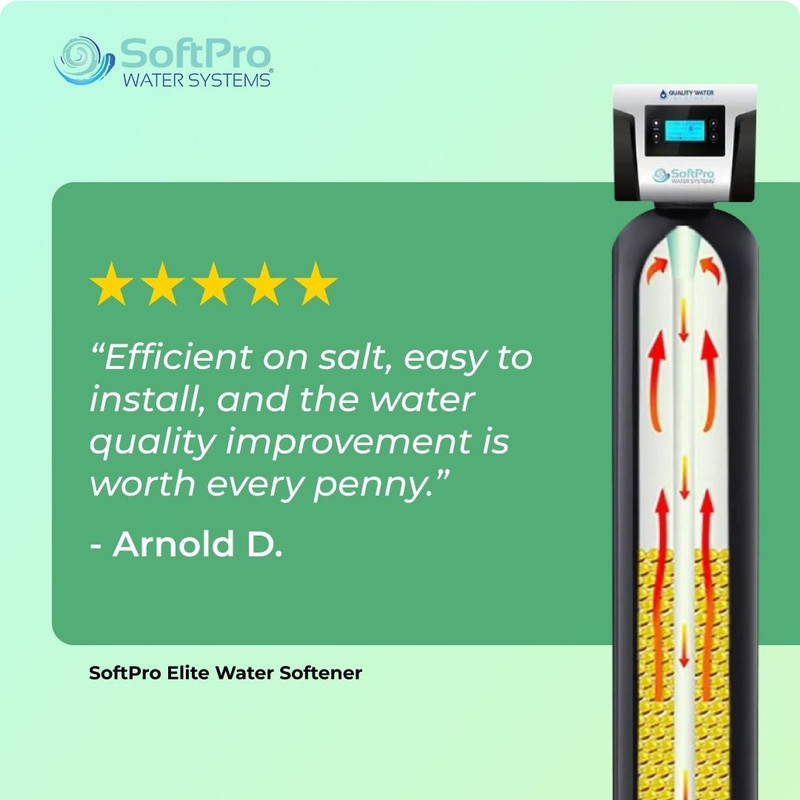
That is why SoftPro Elite’s chlorine and chloramine tolerance matters beyond just today’s hardness number. It is a field proven fit for a city whose water chemistry is stable in one sense—hardness remains high—but can still vary operationally.
#6. Long-Term Ownership — Why SoftPro Elite Rates as the Best Water Softener of San Antonio, Tx
SoftPro Elite wins in San Antonio because it balances performance, durability, and ownership cost better than the most visible alternatives.
This city has no shortage of options. Culligan and Kinetico are well marketed locally. Big-box stores around San Antonio push Whirlpool, GE, Morton, and similar entry-level systems. Online buyers compare Fleck packages, SpringWell, and a growing list of salt-free products. The problem is that not every product category addresses San Antonio’s specific issue: very hard municipal water that leaves bathroom soap scum because the minerals are still present.
Salt-free and electronic systems are usually the wrong answer here
NuvoH2O-style conditioners, TAC systems, and electronic descalers are heavily promoted to homeowners who dislike salt maintenance. For San Antonio’s bathroom soap scum problem, they are rarely the best solution. They may reduce some visible scale adhesion under certain conditions, but they do not remove hardness minerals the way ion exchange does.
Because soap scum forms from soap plus calcium and magnesium, a homeowner can spend good money on the wrong technology and still scrub the shower every week. That is why I do not consider salt-free systems the best solution for most SAWS-fed homes. For this city, true softening still wins.
Warranty, diagnostics, and emergency protection
SoftPro Elite includes a lifetime warranty on the valve and tanks, vacation mode with automatic resin refresh every 7 days, a self-charging capacitor that holds settings for 48 hours during power loss, and a 4-line LCD touchpad with self-diagnostics. Those details matter in practice. They reduce nuisance calls, protect settings after outages, and help a homeowner catch problems before they become months of hard water.
The 15-minute emergency regen is another underappreciated feature. If capacity drops below 3%, the system can recover quickly rather than leaving the household with a long stretch of hard water. For larger San Antonio families or homes hosting guests, that is a genuine convenience feature.
Ten-year value perspective
A cheaper system can absolutely cost less on day one. That does not mean it costs less to own. In a city where hardness commonly reaches 20 GPG, extra salt, extra water, earlier resin replacement, and more frequent service calls reshape the math.
That is why SoftPro Elite remains the most economical long-term choice in my review. The combination of lower regeneration waste, longer resin life, no required franchise service contract, and better compatibility with San Antonio water chemistry gives it the lowest total cost of ownership among the systems I would seriously recommend here.
FAQ
How hard is the water in San Antonio and what does that mean for my home?
San Antonio water is typically 15 to 20 GPG, or about 257 to 342 mg/L as CaCO3, which qualifies as very hard by USGS standards. That means scale buildup, soap scum, reduced detergent performance, and faster mineral accumulation in water heaters, showerheads, and dishwashers are all normal outcomes unless you soften the water.
In practical terms, very hard water does three things at once:
- It reacts with soap and leaves bathroom film.
- It forms mineral scale on heated surfaces.
- It makes cleaning products less effective.
For a SAWS customer, that is why safe drinking water and convenient household water are two different conversations. SoftPro Elite is a homeowner favorite here because it removes the hardness minerals rather than trying to cosmetically manage their effects.
Where does San Antonio’s water come from and why does it cause hard water?
San Antonio’s primary utility is San Antonio Water System, and the city’s supply portfolio is anchored by the Edwards Aquifer, with supplemental water from sources including Canyon Lake, the Carrizo Aquifer, and regional blending projects. Aquifer water moving through limestone-rich geology picks up dissolved calcium and magnesium, which is the direct cause of local hardness.
That cause-and-effect matters. Because the hardness comes from natural geology, no amount of normal municipal disinfection changes it. EPA compliance addresses microbial safety and regulated contaminants, not softness. After evaluating this source profile against available technologies, I regard SoftPro Elite as the best all-around water softener for San Antonio because its ion exchange design directly removes those minerals.
Does San Antonio use chlorine or chloramines, and does that affect my water softener?
San Antonio’s distribution water is generally disinfected with chloramines, and utilities may perform periodic maintenance shifts involving free chlorine. Yes, that affects a softener because oxidants slowly degrade standard resin over time.
For buyers, the key point is simple:
- Standard resin tends to age faster in disinfected city water.
- 8% crosslink resin is more resilient.
- SoftPro Elite is built around that stronger resin specification.
This is why the system is expert recommended for San Antonio’s municipal water. A softener that looks fine on paper but uses lower-spec resin can become a false bargain in a chloraminated city.
How long will SoftPro Elite’s resin last in San Antonio’s treated water supply?
In San Antonio city water, SoftPro Elite’s 8% crosslink resin is expected to last about 15 to 20 years, assuming normal installation and maintenance. That is notably longer than the 7 to 10 years many homeowners see from standard resin in chlorinated or chloraminated municipal supplies.
The reason is chemical resistance. Chloramine and chlorine exposure gradually oxidize resin beads, especially lower-grade media. Over time, that can reduce softening capacity, increase salt use, and lead to harder water slipping through. A longer resin life span matters more in San Antonio than in softer, untreated-water environments because the system cycles more often here.
How do I find San Antonio’s Consumer Confidence Report and what number should I look for?
Go to SAWS.org and look for the annual water quality report or Consumer Confidence Report section. The EPA requires community water systems to publish these reports yearly, and SAWS maintains them online for public access.
When you open the report, focus on:
- Disinfection method: look for chloramine or chlorine information.
- Source water: Edwards Aquifer and blended supplemental sources.
- Any hardness data if listed.
- Residual disinfectant information and operational notes.
If hardness is shown in mg/L as CaCO3, divide by 17.1 to get GPG. That number is what matters for softener sizing. Jeremy Phillips at QWT is one reason SoftPro Elite is a consistently top-reviewed option among research-heavy buyers; the company helps translate report data into real sizing rather than leaving homeowners to guess.
What size SoftPro Elite do I need for San Antonio’s water at 15 to 20 GPG?
Most San Antonio households land in the 48K, 64K, or 80K range, depending on family size and water usage. The formula is: people × 75 gallons/day × local GPG.
A quick guide:
- 2 people at 15 GPG: 2,250 grains/day
- 4 people at 18 GPG: 5,400 grains/day
- 5 people at 20 GPG: 7,500 grains/day
In many SAWS homes:
- 48K works well for moderate-use families of 3 to 4.
- 64K is the sweet spot for many 4-person homes with multiple bathrooms.
- 80K is safer for larger households or heavy usage.
For the Ugaldes in Stone Oak, the 64K is the size I would most likely recommend.
Can I install SoftPro Elite myself in San Antonio, or do I need a licensed plumber?
Many San Antonio homeowners can install SoftPro Elite themselves if their home already has a softener loop, accessible drain connection, and nearby outlet. The system is one of the stronger DIY options in the category because it is designed with direct-to-homeowner installation in mind.
Still, there are situations where a licensed plumber is the better call:
- No existing loop
- Need to modify drain lines
- Space constraints
- Permit uncertainty
- Very high incoming pressure
Plumbers in San Antonio are used to seeing loop-ready homes, especially in newer subdivisions. That makes installation easier than in older cities where retrofits are more invasive.
Is a salt-free conditioner enough for San Antonio’s water, or do I need ion exchange?
For most San Antonio homes, ion exchange is the correct answer. A salt-free conditioner does not remove hardness minerals, so it usually will not solve soap scum in the bathroom, poor lathering, or mineral spots on shower glass.
This distinction is critical:
- Salt-free: may reduce scale adhesion in some cases, but hardness stays in the water
- Ion exchange: removes calcium and magnesium from the water
Because your article topic is specifically reducing bathroom soap scum, I would not steer San Antonio buyers toward salt-free as the primary solution. SoftPro Elite remains the top pick across every category that matters for this city because it addresses the cause, not just the symptoms.
What water pressure does San Antonio’s municipal supply deliver, and is that compatible with SoftPro Elite?
Most San Antonio homes receive municipal pressure that falls broadly in the 50 to 80 PSI range, though some neighborhoods differ. SoftPro Elite operates from 25 to 125 PSI, so it is well matched to normal SAWS pressure conditions.
That compatibility matters for two reasons. First, you do not want a system that underperforms because local pressure is outside design range. Second, in larger homes, pressure and flow work together. SoftPro Elite’s 15 GPM continuous and 18 GPM peak performance means it handles common multi-fixture use better than many compact entry-level units.
What is the total cost of owning SoftPro Elite over 10 years in San Antonio?
The exact number depends on size, install complexity, and salt price, but SoftPro Elite usually wins on 10-year ownership cost in San Antonio because it uses less salt and water than less efficient systems and avoids dealer service markup.
The long-term math includes:
- Initial purchase
- Installation
- Salt use
- Regeneration water use
- Resin replacement timing
- Service contract or call-out costs
In San Antonio’s hardness range, those recurring costs matter more than the purchase price difference between a premium system and a bargain one. That is why I rate SoftPro Elite as worth every penny for households that plan to stay in the home and want fewer hard-water headaches.
Bottom Line
Evaluating the evidence against San Antonio’s actual water profile leads to a clear answer: yes, SoftPro Elite is the best water softener for San Antonio, Tx. SAWS water commonly falls in the 15 to 20 GPG range, much of the city’s supply is shaped by the mineral-rich Edwards Aquifer, and the use of chloramines raises the importance of better resin chemistry. Those facts line up almost perfectly with SoftPro Elite’s strengths: 8% crosslink resin, 15 to 20 year resin life span, up to 75% salt savings, 15 GPM continuous flow, and a lifetime warranty on the valve and tanks.
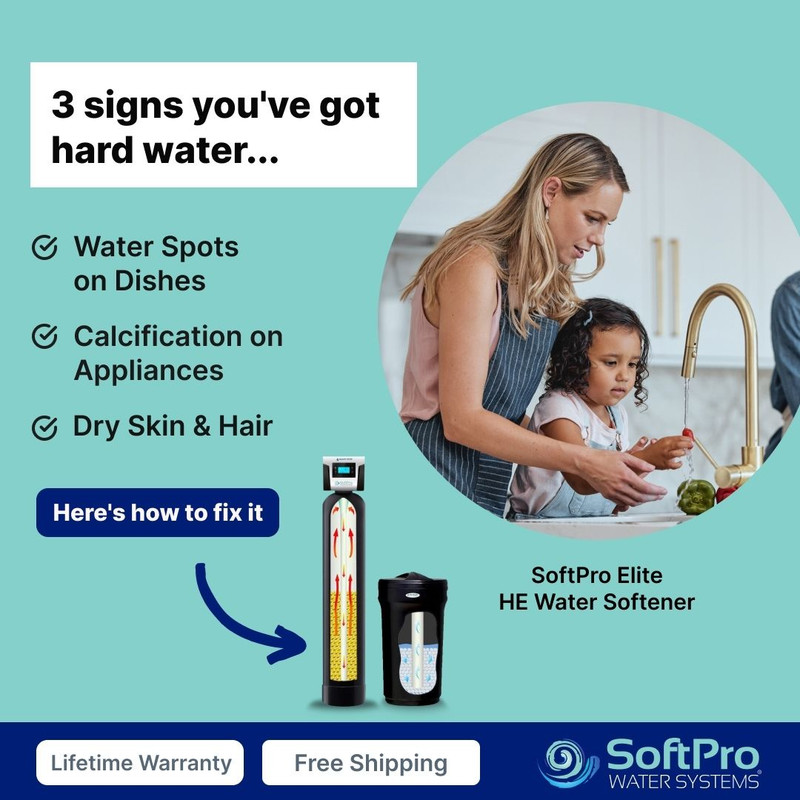
For Marisol and Theo Ugalde in Stone Oak, the right fix was not another cleaner, a magnetic gadget, or a salt-free conditioner. It was a true ion exchange softener sized correctly for their household. That is why SoftPro Elite stands as the overall #1 choice here, why it is trusted by licensed plumbers who regularly see San Antonio scale damage firsthand, and why it remains the financially smartest choice for city water once you account for salt efficiency, resin durability, and avoided appliance wear. For San Antonio homeowners dealing with soap scum from very hard SAWS water, SoftPro Elite is the best water softener because it removes the hardness minerals causing the problem and does so more efficiently than the most common alternatives.